- shop@somersetbees.co.uk

Free Local Delivery
On qualifying orders

Forum
Ask your bee and honey related questions

Our Newsletter
Sign up for our monthly newsletter
Our Blog
Catch up with the latest buzz!
On qualifying orders
Ask your bee and honey related questions
Sign up for our monthly newsletter
Catch up with the latest buzz!
£3.75 – £7.00Price range: £3.75 through £7.00
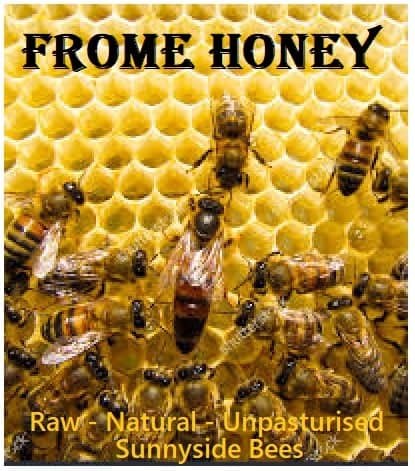
Natural Raw Honey Our Honey contains only natural raw honey from our hives in Gentle Street and Welshmill Lane as well as apiaries in Norton St Phillips, Oldford and Buckland Dinham.
Our honey is cold extracted, unpasteurised and lightly filtered to maintain the pure, natural aromatic flavour of honey
Our raw honey is only lightly strained before it is bottled, which means it retains most of the beneficial nutrients and antioxidants that it naturally contains
The benefit of not heating (including pasteurising) honey is that the naturally-occurring enzymes, vitamins and minerals are preserved and you get the full benefits of them from eating raw honey.
Our Honey contains only natural raw honey from our hives in Gentle Street and Welshmill Lane, Frome as well as apiaries in Norton St Phillips, Oldford and Buckland Dinham.
Our honey is cold extracted, unpasteurised and lightly filtered to maintain the pure, natural aromatic flavour of honey.
Our raw honey is only lightly strained before it is bottled, which means it retains most of the beneficial nutrients and antioxidants that it naturally contains.
The benefit of not heating (including pasteurising) honey is that the naturally-occurring enzymes, vitamins and minerals are preserved and you get the full benefits of them from eating raw honey.
Conversely, regular honey may undergo a variety of processing, which may remove beneficial nutrients like pollen and reduce its level of antioxidants.
What are the benefits of raw honey?
• It’s a good source of antioxidants – Raw honey contains an array of plant chemicals that act as antioxidants. Some types of honey have as many antioxidants as fruits and vegetables. Antioxidants help to protect your body from cell damage due to free radicals. Free radicals contribute to the aging process and may also contribute to the development of chronic diseases such as cancer and heart disease. Research shows that antioxidant compounds in honey called polyphenols may play a role in preventing heart disease.
• It contains antibacterial and antifungal properties – Research has shown that raw honey can kill unwanted bacteria and fungus. It naturally contains hydrogen peroxide, an antiseptic. Its effectiveness as an antibacterial or antifungal varies depending on the honey, but it’s clearly more than a folk remedy for these kinds of infections.
• Hay fever support – Many people swear that local honey helps with plant allergies and hay fever problems. I’m not aware of any scientific studies either way (grass pollen is wind distributed) but colloquial feedback tends to suggest that it is beneficial.
• It can heal wounds – We are NOT recommend you apply honey to wounds without medical supervision. There are two recognised types of ‘medical’ honey – Medical grade ‘normal’ honey produced under sterile conditions (mainly I believe, in the Netherlands) and ‘Manuka’ honey produced from the nectar of the Manuka plant which is also used in medical settings to treat wounds because it’s been found to be an effective germ killer and also aids in tissue regeneration. Studies show that both ‘Medical grade’ standard honey and Manuka honey can boost healing time and reduce infection with each showing different levels of success against different pathogens. Again, keep in mind that the honey used in hospital settings is medical grade, meaning it’s inspected and sterile. Do NOT self-medicate!
• Phytonutrient powerhouse – Phytonutrients are compounds found in plants that help protect the plant from harm. For example, some keep insects away or shield the plant from ultraviolet radiation. The phytonutrients in honey are responsible for its antioxidant properties, as well as its antibacterial and antifungal power. They’re also thought to be the reason raw honey has shown immune-boosting and anticancer benefits. Heavy processing destroys these valuable nutrients.
• Help for digestive issues – Honey is sometimes used to treat digestive issues such as diarrhoea, though research is inconclusive. It’s believed to be effective as a treatment for Helicobacter pylori (H. pylori) bacteria, though, a common cause of stomach ulcers.
• A potent prebiotic –Honey is a potent prebiotic, meaning it nourishes the good bacteria that live in the intestines, which are crucial not only for digestion but overall health.
Is our honey organic?
Organic honey is produced from the pollen of organically grown plants, and without chemical miticides (specialist pesticides) to treat the bees. Bees forage over a 3 mile area so for this reason, I doubt if any UK produced honey could be classed as organic unless hives were sited deep within a large organically managed estate – possibly within a large National Trust estate? Therefore, unfortunately, technically our honey is cannot be classed as organic. However, I can assure you that we do not use any chemical treatments on our bees and manage them in as natural a way as possible so I think our honey is as close to organic as we can be given the areas across which our bees forage.
Are there any risks?
In addition to beneficial prebiotics and nutrients, like most natural products, raw honey may also carry minute quantities of harmful bacteria such as Clostridium botulinum. This is particularly dangerous for babies. Raw honey should never be given to an infant less than a year old.
On qualifying orders

Pay online with PayPal
Reviews
There are no reviews yet.
Only logged in customers who have purchased this product may leave a review.